“I only need three things to subordinate it: an iron whip, an iron hammer, and a sharp dagger. I will whip it with the iron whip. If it does not submit, I will hammer its head with the iron hammer. If it still does not submit, I will cut its throat with the dagger.”
Wu Zetian
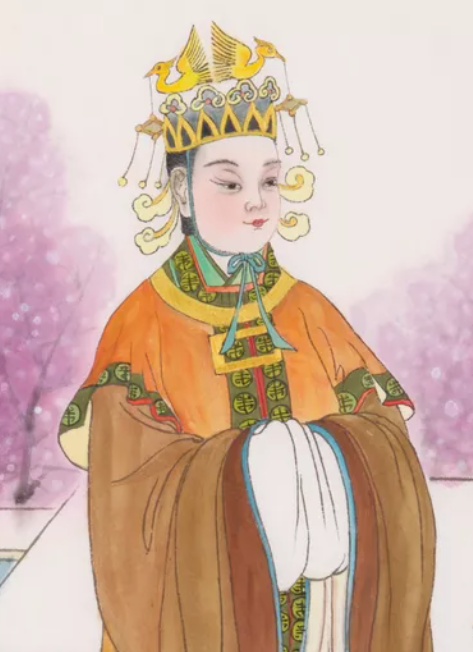
Wu Zetian was an extraordinarily successful, ambitious leader of China, though she was also known as one of China’s cruelest leaders. Known as the “Holy and Divine Emperor,” she was the first and only woman emperor of China, born in 624. The name she was born with was Wu Zhao, which meant “the sun, moon, and the sky.” Her father was the Minister of Works in China, leading to great fortune for Wu and her family. She was raised in a wealthy family with power. Once her father died, the family’s money disappeared as well.
One day, when Wu was thirteen, a representative of the emperor arrived and was searching for a woman to work as an imperial concubine. Desperate to move up the ranks, Wu entered the court of Emperor Taizong. In 649, the emperor became gravely ill, and the prince, Prince Li Zhi, and his concubines cared for him. Once the emperor died, Wu Zetian was sent away, while the prince took the throne. Wanting her position back, she attempted to beg Li Zhi, but all attempts were unsuccessful. Fortunately for her, the empress, Empress Wang, adopted her back into her court, wanting an ally against another concubine of the emperor.
When Wu Zetian was back in the palace, she continued to climb to the top by manipulating those who held greater influence. In one instance, she turned Empress Wang, the woman who allowed her to return to the palace, against the emperor’s favorite consort, and then arranged their imprisonment, leaving them to die in prison. This strategy allowed her to move to the top as empress.
In 684, with the passing of the emperor, Wu Zetian named herself the new Emperor of China, and created her own dynasty called the Zhou dynasty. For the next fifteen years, Wu reigned over China as the first female empress. Using her position to her advantage, she would send law officers against her opponents. This approach led to the deaths of many people, and the exile of others, including her own family members. She had four sons: one mysteriously died and another was exiled and killed. The final two were also soon disposed of, allowing Wu to continue her reign, no longer threatened by potential heirs.
She was also a great feminist, and she worked hard to keep men and women equal. In one example, she altered the mourning period for mothers to be as long as the father’s (which usually was longer). She also appointed women to higher-ranking positions in the palace.
Wu Zetian’s time as emperor ended in 705 when she was overthrown by a palace coup. Soon after, she died at eighty-one years old. Wu Zetian was a powerful ruler who knew how to climb her way to the top. She was ambitious and did everything possible to climb to the position she wanted. She was an early example of a feminist who brought other women up with her and who was unafraid to break through barriers that tried to stop her.