"It is better to inspire a reform than to enforce it"
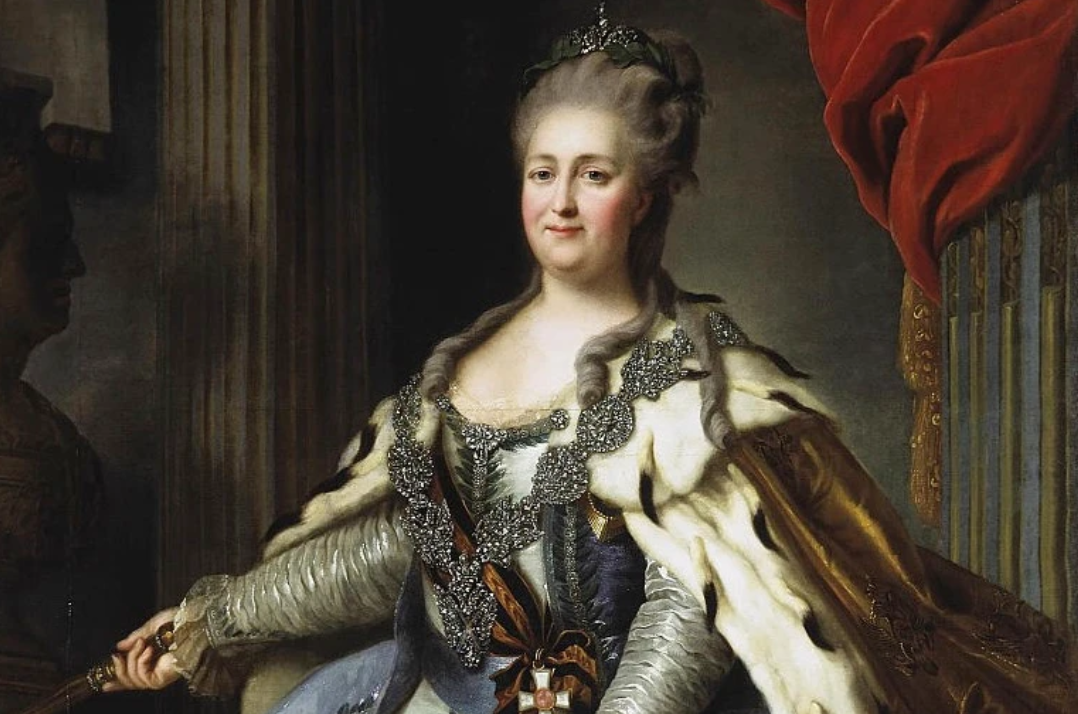
“The more a man knows, the more he forgives.”
Catherine the Great
Catherine the Great was born with the name Sophie Friederike Auguste von Anhalt- Zerbst in 1729. She was born in what is now Poland to a family that was not wealthy. Her father was a low-status Prussian prince, but her family did not have the wealth to go with this litle. Because of this, she was expected to marry into a family with a higher social status. At just ten years old, her family introduced her to her second cousin Charles Peter Ulrich of Schleswig- Holstein-Gottorp, the future emperor of Russia and future husband. He would later be known as Peter III, and was chosen by his aunt Elizabeth, the current Empress of Russia, as the tsar of Russia. This arranged marriage was expected to strengthen Russia and Prussia’s bond. In 1745, when Sophie was married at sixteen, she changed her name to Catherine after converting to Orthodox Christianity, and seventeen years later, Peter III was made tsar of Russia.
Six months after becoming tsar, Peter III left on a trip to Germany, which was his original homeland. During this absence, in 1762, Catherine declared herself the ruler of Russia. Soon after this trip, Peter was assassinated. It is still debated today whether his death was the doing of one of his political enemies or of his wife and her supporters. Catherine proved her strength and she showed the people in Russia her power with her determination to be Empress, and her willingness to go to great lengths to defeat anything in her way.
For the next thirty-four years, Catherine the Great ruled over Russia as Empress, which is the longest reign of any woman in Russian history. Her reign led to many significant achievements for Russia. This included her work to westernize Russia and strengthen its power against other nations. Catherine expanded territory, annexing Crimea and partitioning Poland in the process. Along with helping to advance Russia’s growth, Catherine the Great opened education systems for women, promoted religious equality, opened hospitals, and supported and introduced new art to Russia. On the other hand, Catherine seemed to neglect the peasants of Russia, known as “serfs,” who were unpaid. Historians have suggested that this approach may have been because she did not want to cause tension between herself and other nobles.
After the French Revolution in 1789, Catherine began to express concern about being overthrown. To try and hide the events in France, Catherine the Great forbade the publication of foreign books and restricted free speech within the Russian court.
In 1796, Catherine died of a stroke and left her eldest son the throne. Catherine the Great was a strategic mastermind and used everything she could to her advantage. She skillfully expanded her country, which strengthened her military; she prioritized education, and the equality of her people; and she demonstrated the power of women leaders. Before her death, she wrote memoirs for future generations, during a time when monarch writing was uncommon and considered wrong. A powerful example is: “If only you knew all the perils and misfortunes that have threatened me, and that I have overcome.” Catherine the Great was the last female leader in Russia since her death in 1796.