“All strange and terrible events are welcome, but comforts we despise.”
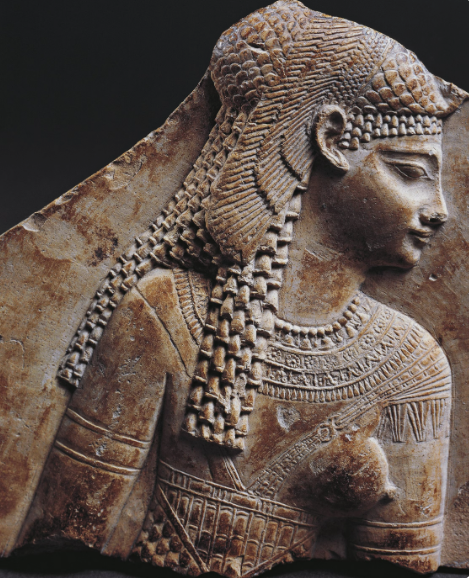
Cleopatra VII
Cleopatra VII (commonly referred to as “Cleopatra”) was the Queen of the Ptolemaic Kingdom of Egypt and played a significant role in the growth and prosperity of her land through strong leadership and strategic political decisions. Through her intelligence, political alliances, and determination to maintain Egypt’s independence, Cleopatra proved herself to be one of the most effective and influential leaders of the ancient world. Her reign stands as a powerful example of resilience during a time when female leaders faced considerable obstacles.
Cleopatra was born in 69 B.C.E. as the daughter of Ptolemy XII. Upon the death of her father in 51 B.C.E., she ascended the throne at just eighteen years old with her brother, Ptolemy XIII, whom she eventually married in accordance with Egyptian tradition. The early years of her reign were marked by intense political struggle. Her brother sought control of the throne for himself, ultimately forcing Cleopatra into temporary exile in Syria. Despite this setback, Cleopatra remained determined to reclaim her power. She formed an alliance with Julius Caesar, who helped her defeat her brother (he drowned in the Nile River while fleeing). By the age of thirty, following the death of Ptolemy XIII, Cleopatra was able to return to Egypt and rule once again. Cleopatra’s perseverance and determination to keep her crown demonstrate her strength as a leader who refused to surrender her authority.
One of Cleopatra’s greatest accomplishments was her ability to maintain Egypt’s independence during a time when the Roman Empire was expanding rapidly. Cleopatra is particularly well known for her ability to form strategic political alliances with other leaders, including Julius Caesar and Mark Antony. These relationships allowed her to strengthen Egypt’s position and protect its independence. Even though she had support from these powerful leaders, and this put her in a position to better control her country, she continued to face challenges because she was a woman. She was often underestimated and judged differently than other male leaders. Nevertheless, her ability to partner with other powerful leaders demonstrates Cleopatra’s skill and tenacity, ultimately enabling her to assert control and achieve lasting prosperity for her kingdom.
Cleopatra’s reign lasted for nearly twenty-one years. During her alliance with Mark Antony, he and Cleopatra participated in the Battle of Actium against Octavian. The conflict aimed to end the Roman civil wars that had begun after the murder of Julius Caesar and prevent Octavian from consolidating power. Unfortunately, Cleopatra and Mark Antony faced a defeat, and this began the decline of Cleopatra’s rule. Instead of allowing herself to be captured and paraded as a symbol of defeat, she decided to take her own life in 39 B.C.E. The death of Cleopatra resulted in Octavian’s takeover of Egypt, which was soon incorporated into the Roman Empire.
Cleopatra’s legacy still has an enduring impact on us today. Cleopatra was a highly intelligent ruler who used her education, political insight, and personal relationships to benefit Egypt and overcome the disadvantages she faced as a woman. To this day, Cleopatra’s memory continues to be viewed with tremendous awe and respect, inspiring countless works of literature. Shakespeare’s play “Antony and Cleopatra,” as well as numerous films and television series continue to be inspired by her. Her story is still told, and she remains admired all over the world as a powerful woman leader, who fought tirelessly for her country, and serves as a lasting symbol of female strength and ambition for women around the world today.
Sources:
https://www.history.com/articles/cleopatra https://www.nationalgeographic.com/history/article/cleopatra-egypt-pharaoh-life-history https://www.history.com/this-day-in-history/september-2/the-battle-of-actium https://www.history.com/this-day-in-history/august-10/cleopatra-commits-suicide https://www.nationalgeographic.com/history/article/cleopatra-egypt-pharaoh-life-history