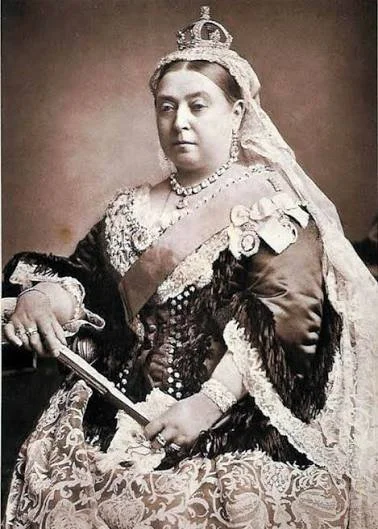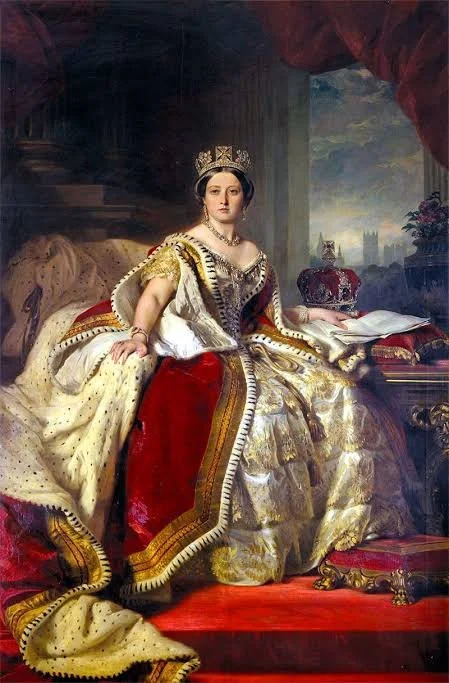
Queen Victoria
Queen Victoria led a 64-year reign over the United Kingdom from 1837 to 1901 during what would become known as the Victorian Era. At the end of her reign, approximately one in four people on planet Earth were subjects of the British Empire, which spanned over one-fifth of the world’s surface. She earned many nicknames including The Famine Queen, the Widow of Windsor, Grandmother of Europe, and Queen Vic.
Her rise to the throne was unusual. After the death of the successor to King George III, Princess Charlotte, and her son who died during childbirth, Princess Charlotte’s brothers (all unmarried) were forced to produce an heir as soon as possible. Queen Victoria’s father was the first to marry and have a child. Princess Alexandrina Victoria of Kent was born in 1819.
Victoria had an unhappy childhood. Her mother and a member of the royal household, Sir John Conroy, attempted to take power by creating “the Kensington system.” This system was a harsh set of rules with the goal of isolating Victoria in Kensington Palace. In 1837, when Queen Victoria was 18, she had the ability to take the throne. She banned Sir John Conroy from her court and distanced herself from her mother. In 1840, Queen Victoria married a German prince, who was also her cousin, Prince Albert. Later, they had nine children together.
Before Queen Victoria’s reign, the monarchy’s reputation had been very poor. The people in the United Kingdom considered replacing the monarchy and creating a republic. During this time, the United Kingdom was facing other challenges like the Irish potato famine, which caused widespread unrest among the people. But Queen Victoria used the help of the prime minister, Lord Melbourne, and her husband, Prince Albert, to stabilize the United Kingdom and strengthen the monarchy.
Victoria supported charities and the arts, as well as changing the public’s ideas about the royals, which had been negative because of their luxurious lifestyles compared to the citizens. The queen changed the way she and her family were viewed, and they became popular figures in the eyes of the public.
At 42 years old, in 1861, Prince Albert died. Victoria, who was deeply in love with her husband, was heartbroken and went into mourning. She no longer appeared in public, and she continued to wear black for the rest of her life.
After the 1860s, Victoria continued her responsibilities. In 1877, she became Empress of India, which led to more influence in foreign relations. During her reign, the United Kingdom grew by 10 million square miles and gained 400 million subjects. Although she was able to expand substantially, the United Kingdom faced many wars during her reign, including the Crimean War and the Boer War.
In 1901, Queen Victoria died of a stroke. But she left behind a great legacy. At an early age, Queen Victoria overcame her personal difficulties and faced challenges involving her power. She was able to change the public perception of the monarchy and royals using strategic leadership approaches, and she leaves behind encouragement for women around the world to conquer their challenges and rise to their full potential.
“We will not have failure, only new learning and success.”